Dental Implants are Incredibly Successful at Replacing Lost Teeth
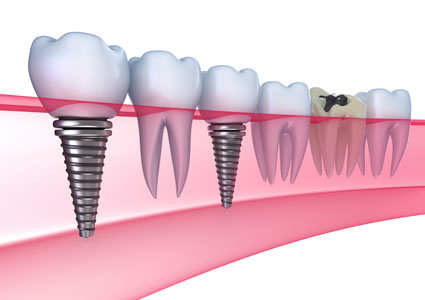
When getting dental implants, most Bryan patients will be pleased to know that there is typically over a 95 percent success ratio following the placement of the dental implants. This number increases to 98 percent with people who take good care of their teeth and by proxy, their dental implants. However, as with most things, there is always a slim chance for failure, and we do get questions about how this can happen. A failed implant is one that is loose, becomes mobile, falls out, or starts to show bone loss of more than one millimeter after the first year. In these cases, we want to make sure to identify and rectify the problem.
In most cases, dental implants are:
Incredibly durable
Long-lasting
Natural looking
Comfortable
Dental implants typically do not fail. There have been a few cases when the bone does not fuse fully with the dental implants, which can cause it to become loose or fall out. At other times, we have seen where the jawbone continues to disintegrate even after placing the implant, which leads to a failure of the dental implants. Careful monitoring of the dental implants is required. If we suspect that there may be cause for concern, we will measure the amount of bone loss over a period of one to two years.
If we start to see mobility in the implant or a bone loss of one millimeter after one year or 0.2 millimeters after the second year, we may start to discuss implant failure and what measures to take. It is important to note that if we find a low density of jawbone, to begin with, we will do a bone graft before ever considering placing dental implants, to ensure the bone can withstand the new implants.
With any oral surgery, and this is true for dental implants as well, there is always a risk of infection. When it comes to dental implants, we call this peri-implantitis, which is caused when there are bacteria present during the placing of the dental implants. The infection can lead to inflammation of the gum and bone and is a relatively common complication. In a few cases, we can treat this condition with antibiotics. However, we also find that in most cases, we will have to remove implant to cure the peri-implantitis.
The following can increase your risk of developing a complication:
Smoking
Poor oral hygiene
Being diabetic
Another potential complication is when dental implants are placed into the upper row of the teeth. As a seasoned professional in placing dental implants, we know to be extra careful that the dental implants do not protrude into the sinus cavity. When this happens, the area can become infected and inflamed. Typically, if we discover that there is a potential for this condition to happen, we will perform a sinus augmentation to create more bone in the area, which will provide better support of the dental implants. Our Bryan dental office always likes to know if you have had sinus issues before the dental implants are placed.
Dental implants can restore missing teeth with a stable, natural-looking solution and are often the recommended choice when early warning signs appear in the mouth. Many people assume tooth replacement can wait, especially when only one tooth is missing or when discomfort seems mild. However, delays can allow shifting, bone loss, and bite changes that…
Dental implants are an effective and modern way to go about replacing missing teeth. If you are missing a tooth, you are not alone in your predicament; most people lose one or more of their permanent teeth over the course of their lives. People lose teeth due to trauma to the face, aging, or oral…
A single missing tooth can present many problems that a dental implant can avoid. A single-tooth implant is designed to replace the root of your tooth. It will work and look like your natural teeth and help prevent complications associated with missing teeth. If you are considering getting an implant, it is important that you…
Replacing missing teeth with dental implants can result in a stable and strong bite. It restores the crown and the root. Knowing how this dental replacement system replaces a missing tooth can convince you to set an appointment with your dentist about it. Here are the details about how dental implants can make this happen.Tooth…
Losing a tooth can be uncomfortable in many ways, and dental implants might be the solution you are looking for. When you are missing a tooth, you may not like the look of your mouth, and you may have difficulty chewing. Dentures and bridges are options for you, but if you want a permanent answer,…
There are multiple options for patients who want to replace missing teeth. Dental implants are a popular choice because of their benefits; however, some patients may prefer another option.There are several tooth replacement options available to most patients. Implant surgery involves placing titanium posts in the jaw of the patient to replace missing teeth roots.…
 When getting