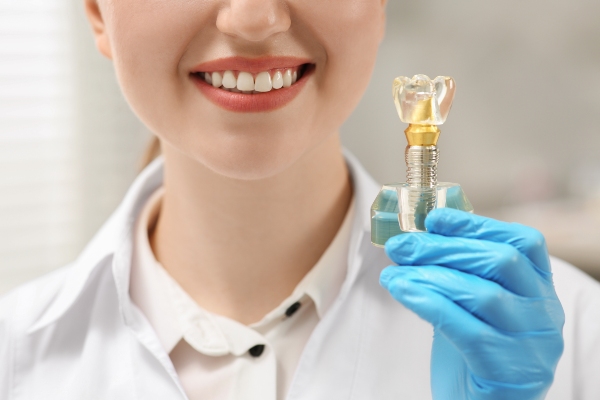
 Dental crowns are often combined with implants to replace missing teeth. Implants are metal posts that are placed in the jaw to replace lost teeth roots, and they serve as foundations for restorations like crowns, bridges, and dentures used to replace missing teeth.
Implants are commonly made with titanium, and they are meant to last the rest of a patient's life once inserted into the jaw. However, the restorations placed on implants are not as durable as they are, so they will eventually need to be replaced.
Using dental crowns to restore implants
Placing dental implants requires oral surgery, but the procedure typically only needs to be done once since implants last a lifetime. The installation procedure often involves patients being injected with a local anesthetic and an incision being made into gum tissues to reach the jawbone.
A hole is made where the implant goes with a dental drill, and the restoration is shoved inside until traction forces hold it in place. The implant fuses with bone tissues over the next six months, becoming part of the jawbone.
Once installed, dentists can cement or screw an implant crown on an abutment that is used to secure the crown to the implant. Dental crowns can last up to 20 years, and replacing them does not require any additional surgery.
The process
Patients are advised to seek dental care immediately if they notice a crown is compromised or damaged. Restoring the implant involves removing the damaged crown and cleaning the abutment. The replacement implant crown is then cemented or screwed on the implant to restore the appearance of the patient’s teeth. In some cases, the patient might have to settle for a temporary crown while a custom replacement is being made in a dental lab. The finished restoration should be ready within two weeks in such cases.
Some of the benefits of restoring implants with dental crowns include:
- Keeps the jawbone healthy: One of the main selling points of implants is how they prevent the bone tissue loss that usually occurs when teeth fall out. Implants become part of the jawbone, so they transfer bite forces into the jaw, giving bone tissues there the stimulus they need to remain healthy. Replacing a damaged implant crown ensures the implant continues to serve its role
- Provides excellent stability: Implants become part of a patient’s jaw through a process called osseointegration, and crowns placed on them enjoy virtually as much stability as real teeth. Those who opt for implants do not have to constantly worry about their artificial teeth falling out of their mouths, as is often the case with dentures
- Does not require special maintenance: Implants are one of the most durable restorations used in dentistry, and they do not require any special care. Brushing, flossing, and avoiding hard foods that can damage implant crowns are all that is required to get the most out of implants
Restore your smile with an implant crown
An implant-supported crown is the closest thing to getting your real teeth back. Implants keep your jawbone healthy, and implant crowns are almost indistinguishable from real teeth. Call or stop by our Bryan clinic to learn more about implants and dental crowns.
Request an appointment or call Rivers Family Dentistry at 979-710-2216 for an appointment in our Bryan office.
Related Posts
A dental crown can repair a damaged tooth or be placed on top of a dental implant to replace a missing tooth. However, you may also wonder if a bridge is the better choice for tooth replacement. Both treatments restore function and improve appearance, but they solve different problems. A closer look at how each…
Dental crowns play a central role in modern restorative dentistry, offering durable protection for damaged teeth while restoring natural function. Traditionally, getting a crown required multiple appointments and weeks of waiting. However, at Rivers Family Dentistry, we utilize the advanced glidewell.io™ In-Office Solution to provide high-quality, permanent crowns in just a single visit.Understanding our same-day…
Dental crowns can treat many dental issues, including cavities. Your dentist will always aim to keep your natural teeth. Placing caps on them can help the dentist do this. Cavities can eat away and weaken teeth. These teeth will need more support after treatments. Here are the details about when dental crowns can help after…